
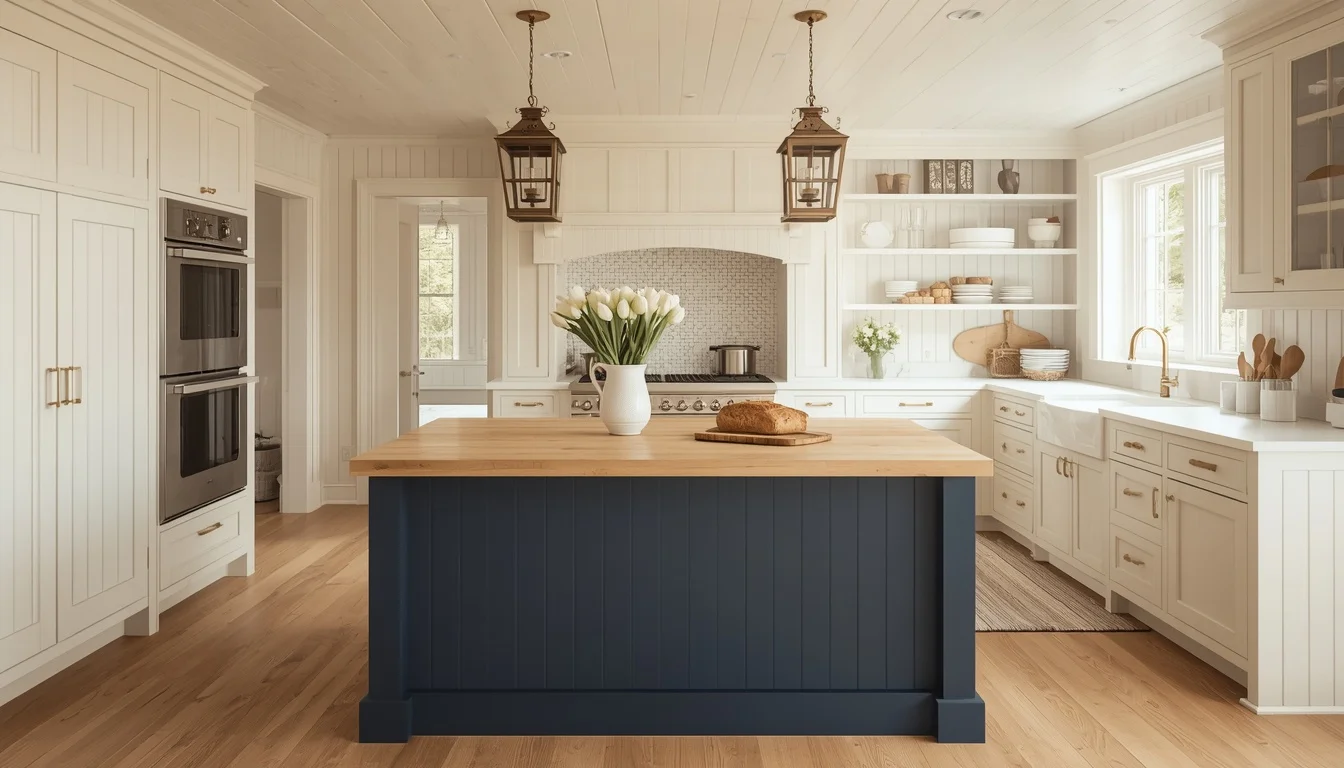
Beadboard kitchen ideas are having a real moment, and it is easy to see why. Those simple vertical grooves bring the cozy, lived-in feel of an old farmhouse to any kitchen, whether it is a brand new build, a rental, or a tired 1990s space that needs some soul.
The best part is that beadboard is one of the most budget friendly ways to add character. A few panels, some trim, and a can of paint can turn a plain island, a bare ceiling, or a boring backsplash into the part of the kitchen everyone notices first. It also hides small dings and scuffs better than flat drywall, which matters in a room that sees as much traffic as the kitchen.
Below you will find what to know before you start, then thirteen ideas with the exact look, how to recreate it, and a tip for each. At the end there is a simple install guide and answers to the questions people ask most.
Before You Start: Beadboard Types, Paint and Supplies
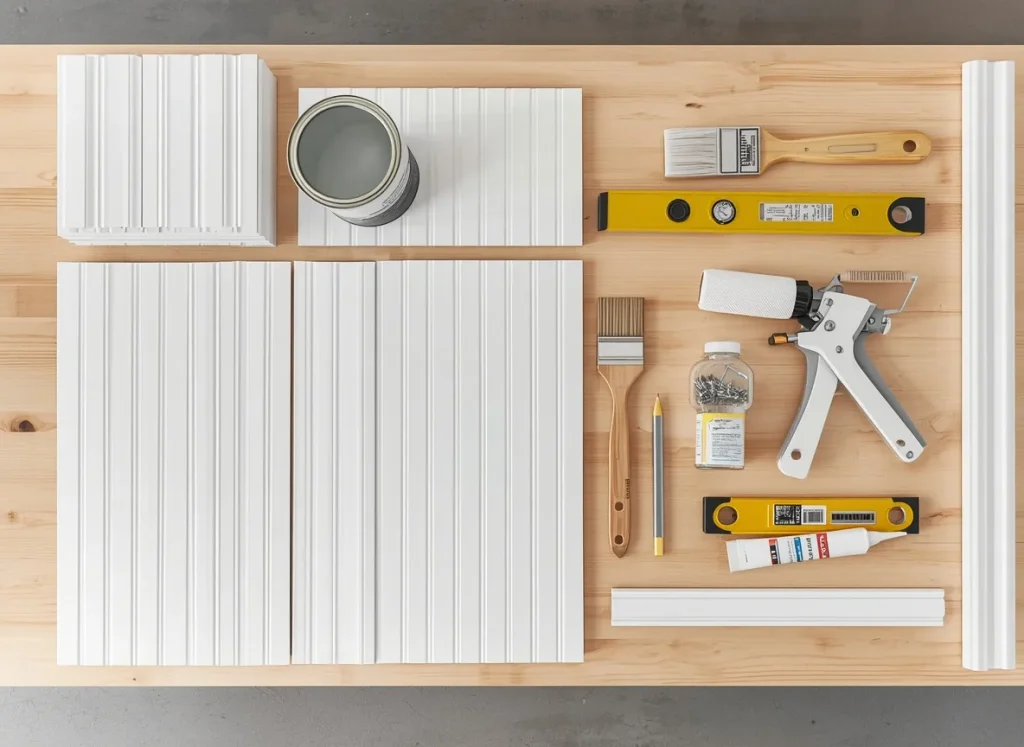
Beadboard comes in two main forms. Large panels are 4 by 8 foot sheets with grooves already cut in, so they go up fast and are the easiest choice for an island, a backsplash, or a full wall. Tongue and groove planks are narrow boards that slot together one by one. They take longer, but they look more like the real old-fashioned thing and work well on ceilings and curved spots.
You will also need to choose a material. Primed MDF is smooth, affordable, and ready to paint, but it does not like standing water, so keep it away from the sink splash zone or seal it well. Real wood costs more and can be stained, and PVC beadboard is the best pick near sinks and in damp areas, since water cannot hurt it.
Good to know: For paint, pick a satin or semi-gloss finish. Both wipe clean easily, which is exactly what a kitchen needs, and they catch the light in the grooves so the texture really shows.
1. Pair a Charcoal Beadboard Island With Old Brick and a Vintage Range
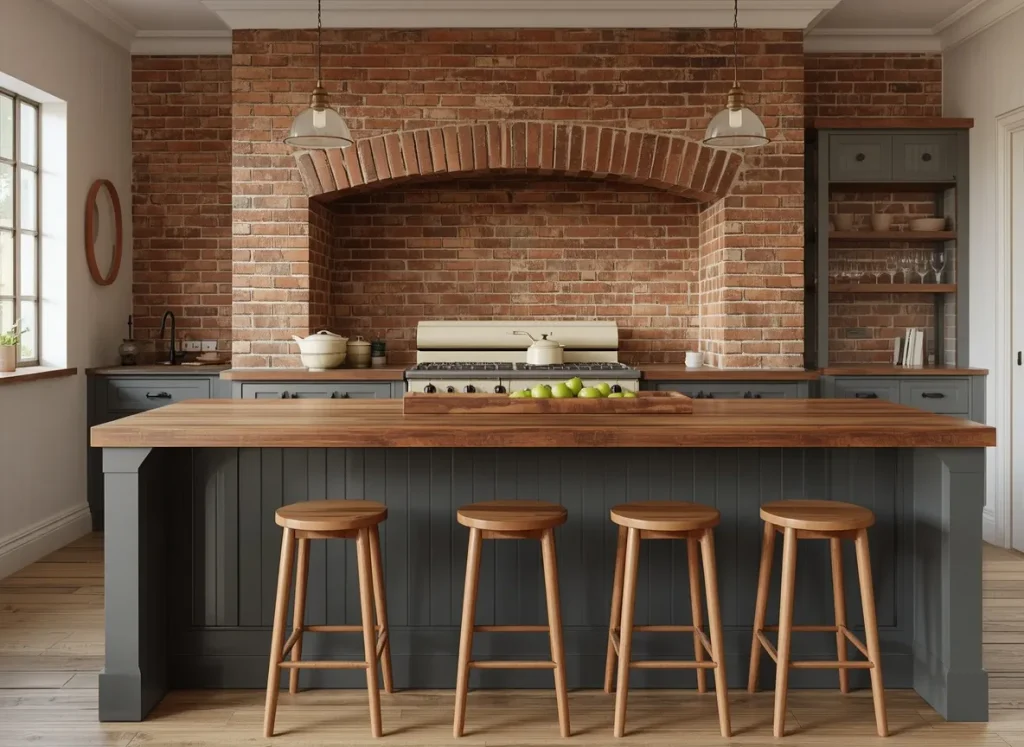
A long island wrapped in charcoal beadboard anchors this kitchen, topped with a thick reclaimed wood counter and four simple wooden stools. Behind it, an old red brick wall curves into an arch around a cream vintage style range, while clear glass pendants and a tray of green apples keep the look warm and collected.
Dark beadboard on an island is a smart move because islands take the most kicks from shoes and chair legs, and a deep color hides those marks. Glue the panels straight onto the island sides with construction adhesive, add a few finishing nails, and cover the edges with simple corner trim. Charcoal looks especially good next to warm materials like brick and reclaimed wood, so the room feels cozy instead of heavy.
Paint tip: Try a soft charcoal with a little brown in it rather than a cold blue black. It feels warmer next to brick and wood.
2. Cover the Ceiling in Whitewashed Beadboard

Soft whitewashed pine beadboard stretches across the whole ceiling of this bright cottage kitchen and carries right down the walls, letting just a hint of wood grain show through. White shaker cabinets, a butcher block island with a bowl of citrus, a black dome pendant, and two little sconces beside the window keep everything simple below.
A ceiling is often the most forgotten surface in a kitchen, and beadboard turns it into a real feature. Tongue and groove planks are easiest here, nailed into the ceiling joists with the grooves running the long way of the room. To get this washed look, brush on watered down white paint and wipe some away with a rag before it dries, so the grain peeks through.
Install tip: Run the planks parallel to the longest wall. It makes a small kitchen feel longer and more open.
3. Frame a Farmhouse Sink With Cream Beadboard Cabinets
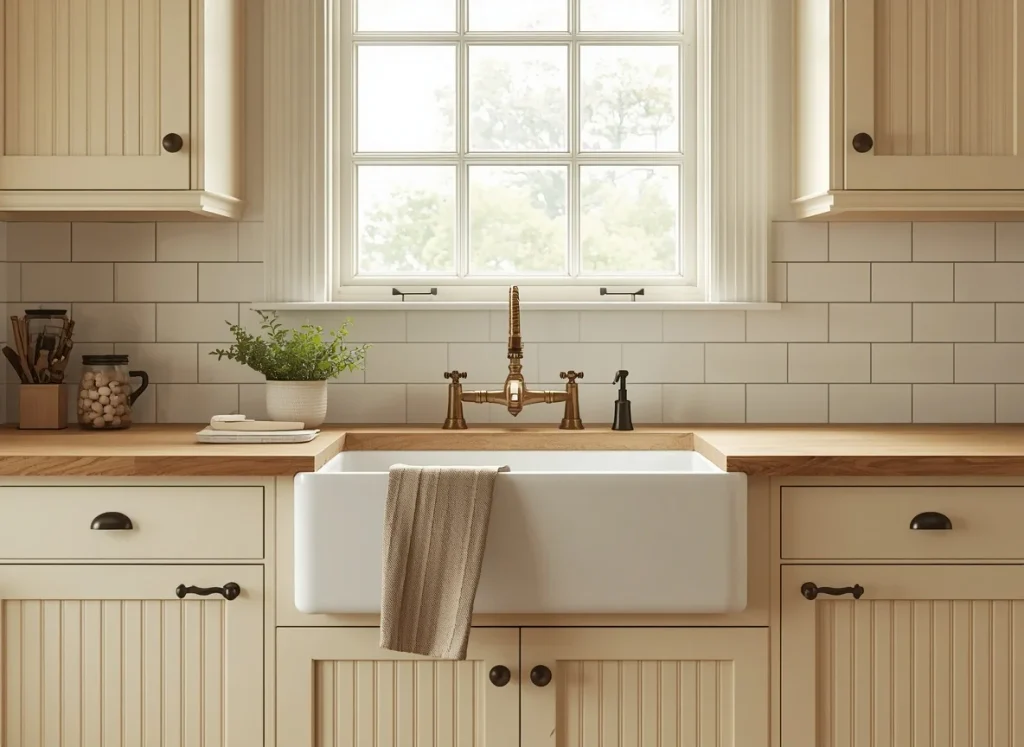
A deep white farmhouse sink sits under a sunny window, framed by cream cabinets with beadboard door fronts above and below. An aged brass bridge faucet, warm butcher block counters, and a linen tea towel hung over the sink edge make the whole corner feel like it has been loved for decades.
You do not need new cabinets for this look. Cut thin beadboard panels to fit inside the frame of each flat cabinet door, glue them in place, and paint everything cream. Dark bronze cup pulls and bar handles finish the vintage feel. Since this spot gets splashed every day, seal the paint well or use PVC beadboard on the doors closest to the sink.
Hardware tip: Mixing two warm metals, like dark bronze pulls with an aged brass faucet, looks more collected than matching every finish.
4. Wrap a Breakfast Banquette in Oxblood Beadboard
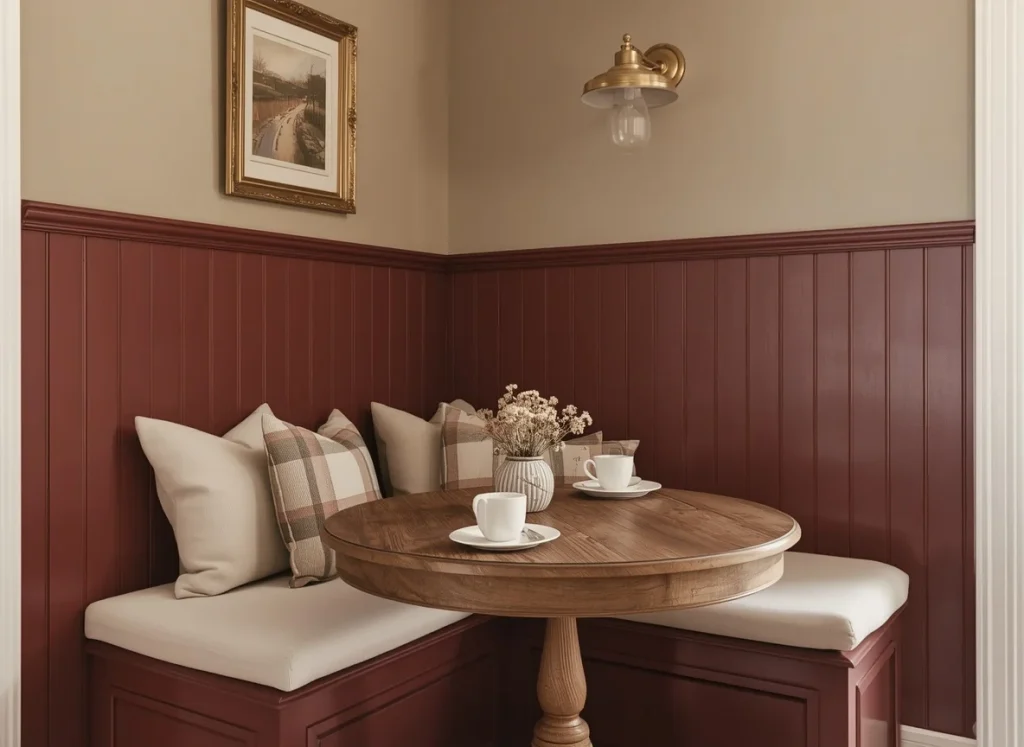
Deep oxblood beadboard wraps the walls and the base of this built-in banquette, finished with a matching chair rail and warm beige paint above. Cream cushions, plaid pillows, and a round wooden pedestal table set with two cups of coffee make it the spot everyone wants for slow mornings.
A dark, rich color feels enveloping in a small corner, which is exactly what you want in a breakfast nook. Run the beadboard about halfway up the wall and cap it with a chunky chair rail painted the same color, so it looks built in. Red tones love warm wood and brass, which is why the gold frame and brass wall lamp above feel so at home here.
Color tip: Test a sample at night under your kitchen lights. Deep reds change a lot after sunset and can look almost brown.
Also read: 20 Black Headboard Bedroom Ideas That Look Bold and Beautiful
5. Go Coastal With a Powder Blue Beadboard Island
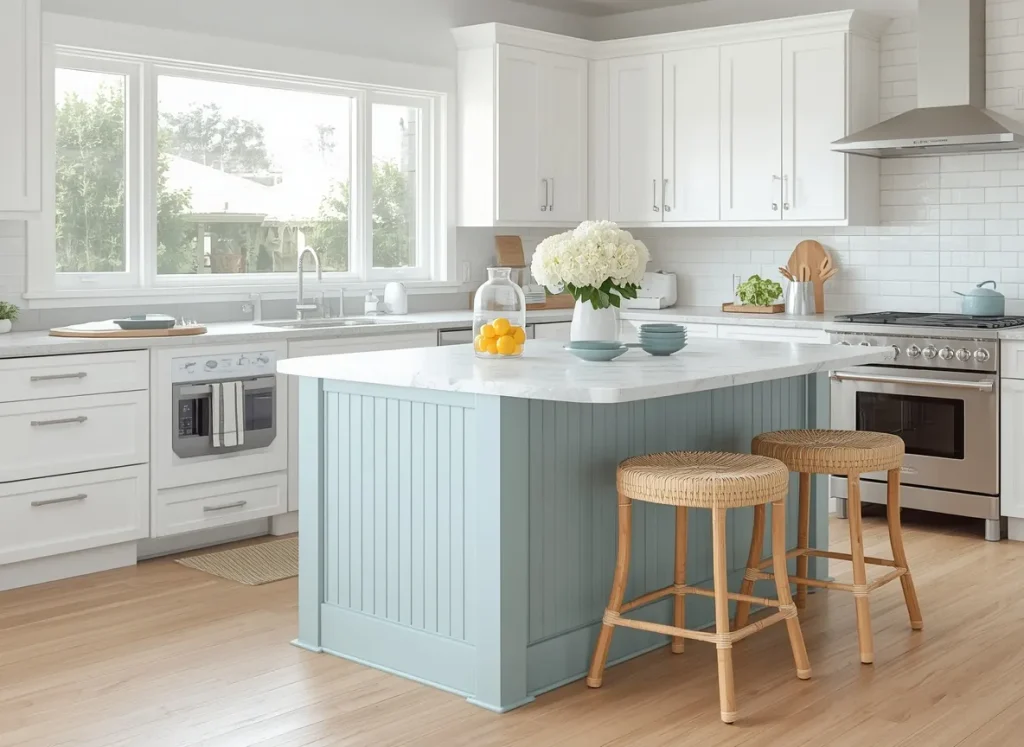
A soft powder blue beadboard island sits in the middle of this bright kitchen, topped with white marble and paired with two woven rattan stools. A glass jar of lemons, a vase of white hydrangeas, and a stack of matching blue bowls keep it light and fresh, while a big window floods the room with sunshine like a beach house kitchen.
Pale blue is one of the easiest ways to add color without making a kitchen feel busy. Keep the rest of the room white and natural, with light wood floors and woven textures, and let the island be the one colorful piece. Beadboard grooves give the soft color extra depth, so even a pale shade looks finished.
Style tip: Pick a blue with a touch of grey in it. Pure sky blues can look childish, while greyed blues feel calm and grown up.
6. Back a Coffee Nook With Butter Yellow Beadboard
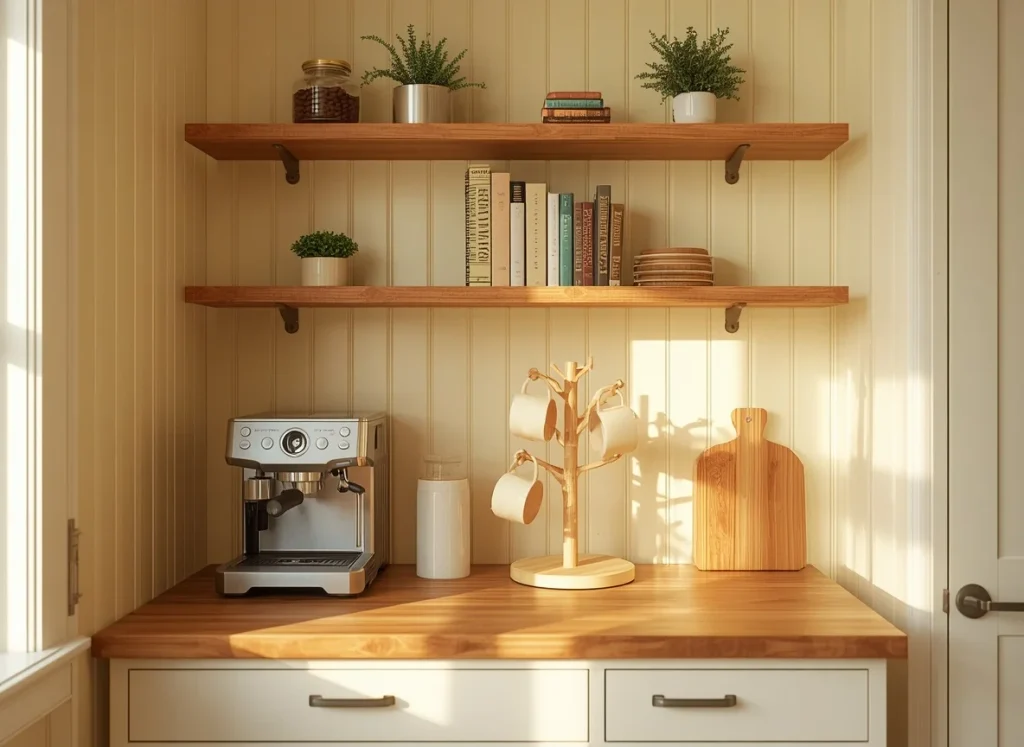
Soft butter yellow beadboard lines the back of this little coffee nook, making it feel like the sunniest spot in the house. An espresso machine, a wooden mug tree with cream mugs, and a cutting board sit on the butcher block counter, while two floating shelves above hold plants, cookbooks, and a jar of coffee beans.
Butter yellow is one of the most popular kitchen colors right now, and a small nook is an easy, low risk place to try it. Beadboard on just one short wall takes an afternoon, and it instantly sets the coffee station apart from the rest of the counter. Warm wood shelves and cream dishes keep the yellow soft instead of loud.
Small space tip: Use a satin finish here. Coffee splashes wipe right off, and the slight sheen bounces light into a dim corner.
7. Add a Peg Rail Over a Beadboard Backsplash
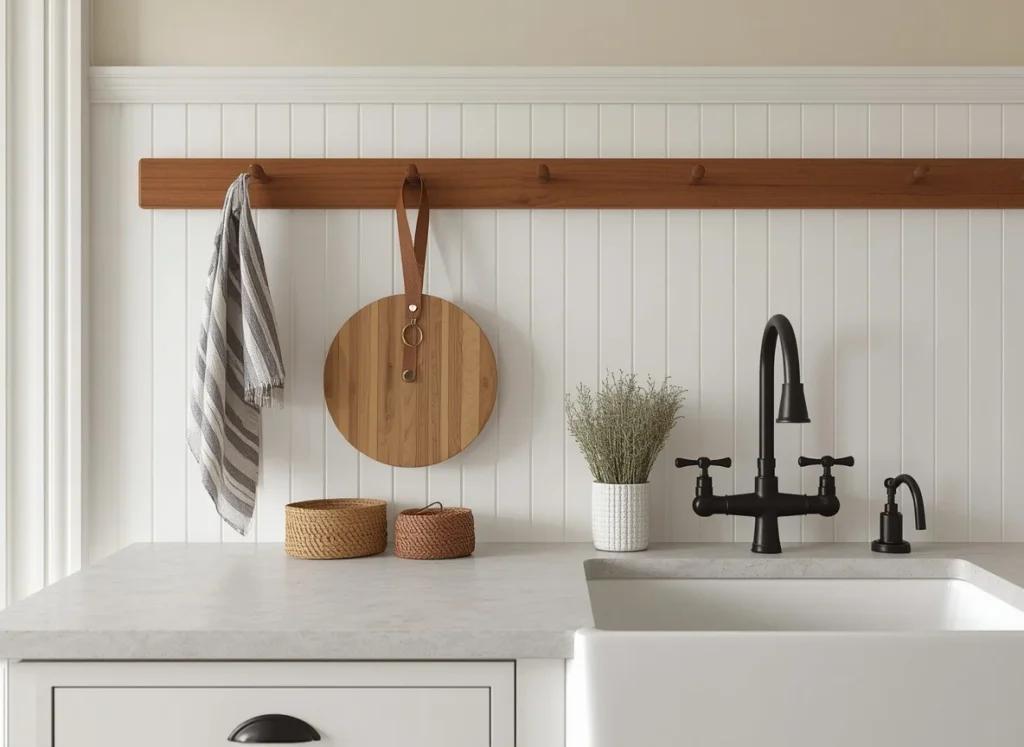
A white beadboard backsplash runs behind a pale gray stone counter, and a long wooden Shaker peg rail stretches across it. The pegs hold a striped tea towel and a round cutting board on a leather strap, while two woven baskets, a pot of dried greenery, and a black bridge faucet over a white farmhouse sink finish the corner.
A peg rail turns the backsplash into storage, which is a big win in a small kitchen. Screw the rail into wall studs a few inches below the top cap of the beadboard, so towels and boards hang at an easy height. Keep heavy pans off the pegs and use them for light, everyday things you like to grab quickly.
Splash zone tip: Behind the sink, use PVC beadboard or seal the paint with an extra clear coat, since water will hit it every day.
8. Clad a Statement Range Hood in Mushroom Gray Beadboard
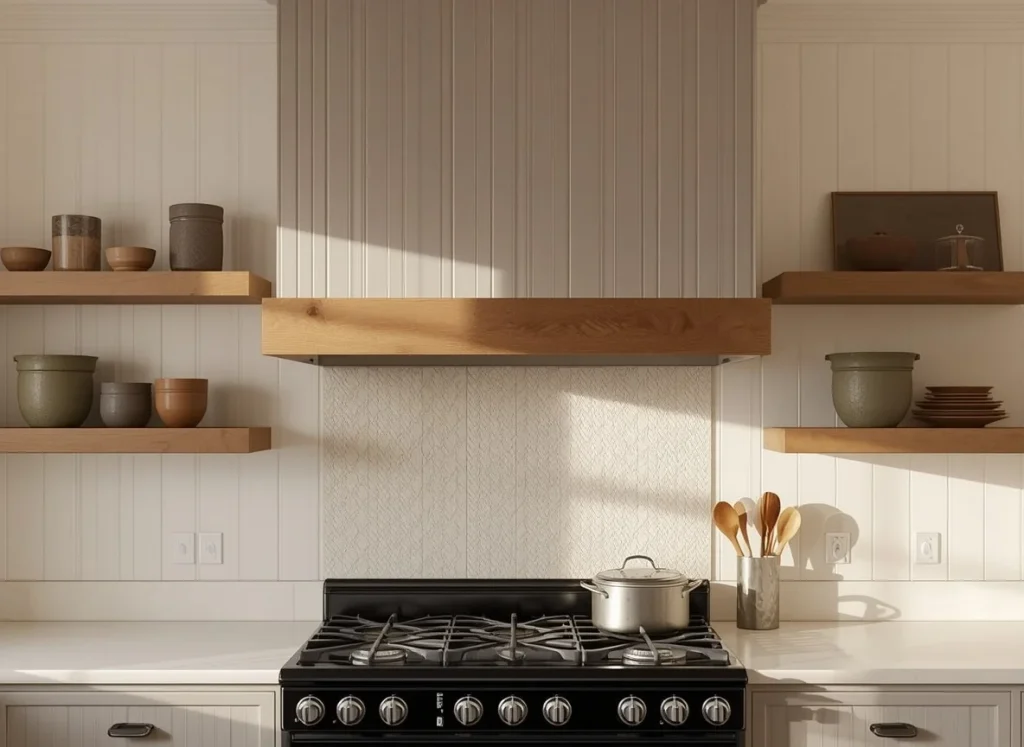
A tall range hood wrapped in mushroom gray beadboard becomes the centerpiece of this kitchen. A chunky oak ledge runs across the bottom like a mantel, a black range sits below, and a textured white tile panel fills the space between. White beadboard walls and open oak shelves of stoneware frame it on both sides.
A plain metal hood can make a kitchen look like an apartment rental. Building a simple wood box around it and covering it in beadboard gives the stove area a custom, built-in look. Mushroom gray is a soft, earthy neutral that sits between greige and taupe, so it works with both warm and cool kitchens.
Safety tip: Leave the hood’s metal insert and vent in place and only clad the outside, so heat and grease still go where they should.
9. Brighten a Small Kitchen With White Beadboard Wainscoting
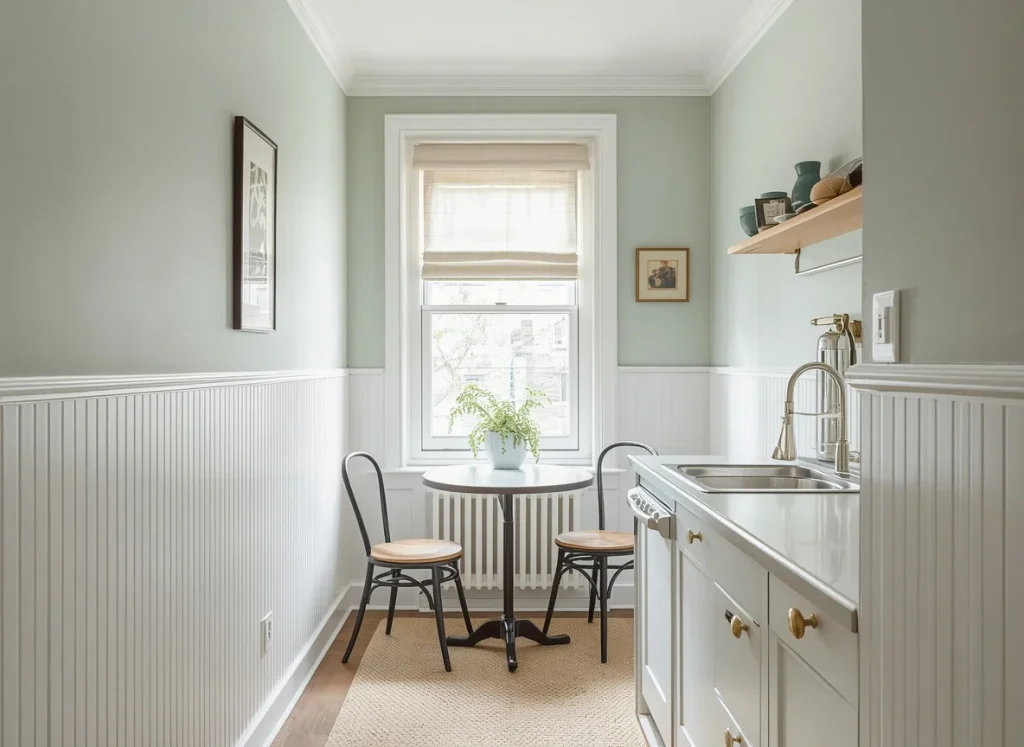
Crisp white beadboard wainscoting runs along the lower walls of this small galley kitchen, topped with a thin chair rail and soft sage green paint above. A little bistro table with two bentwood chairs, a jute rug, and a linen Roman shade at the window make it feel fresh and welcoming.
In a small kitchen, beadboard on only the lower part of the wall adds texture without closing the room in. A common rule is to stop it about one third of the way up the wall, then finish the top edge with a simple chair rail. White on the bottom and a soft color above keeps the space bright, and the beadboard protects walls from bumps and chair backs.
Height tip: If your ceilings are low, take the beadboard a little higher, closer to half the wall. It draws the eye up and makes the room feel taller.
Also read: 15 Kitchen Decor Ideas for Small Spaces That Still Feel Like Home
10. Pair a White Hutch With Terracotta Beadboard
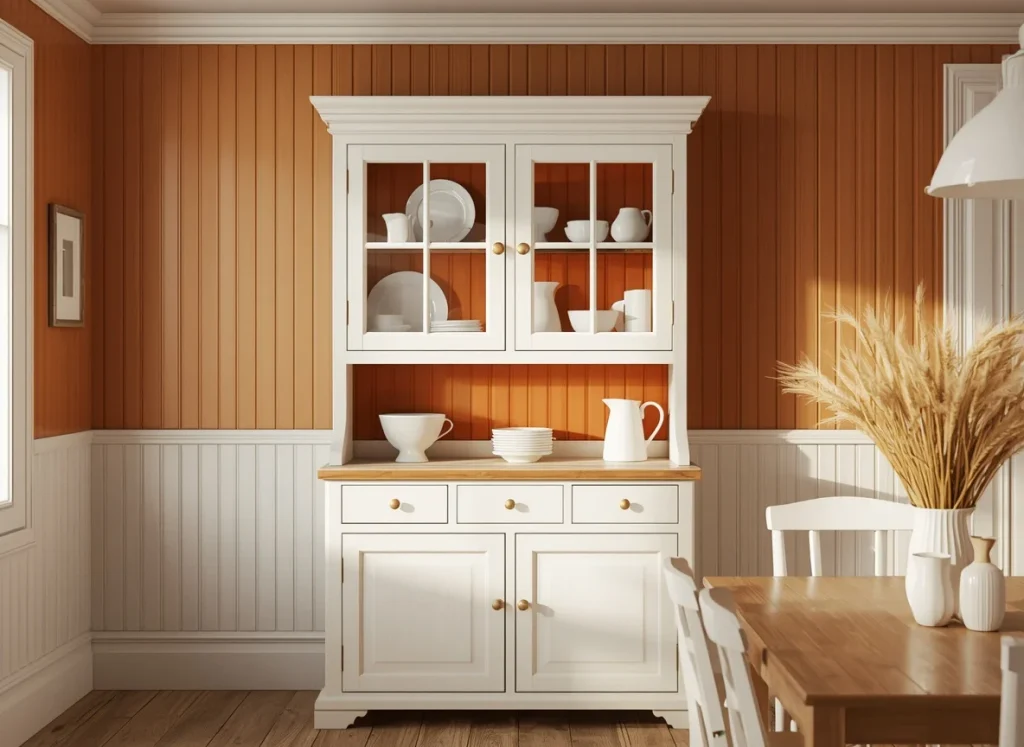
Warm terracotta beadboard covers the upper wall of this dining corner, with crisp white beadboard wainscoting below. A tall white hutch with glass doors carries the same earthy color inside, so white plates, bowls, and pitchers stand out on every shelf, and a vase of dried wheat on the table nearby picks up the warm tones.
Lining the back of a hutch is one of the easiest beadboard projects on this list, and it takes a single afternoon. Cut a thin panel to fit, paint it, and slide or glue it in place. For the full look in the photo, paint the upper wall beadboard the same shade, so the hutch and the wall blend together.
Renter tip: Hold the panel in with small removable tabs instead of glue, so you can take it out when you move.
11. Balance Farmhouse Charm with Rich Oak Paneling
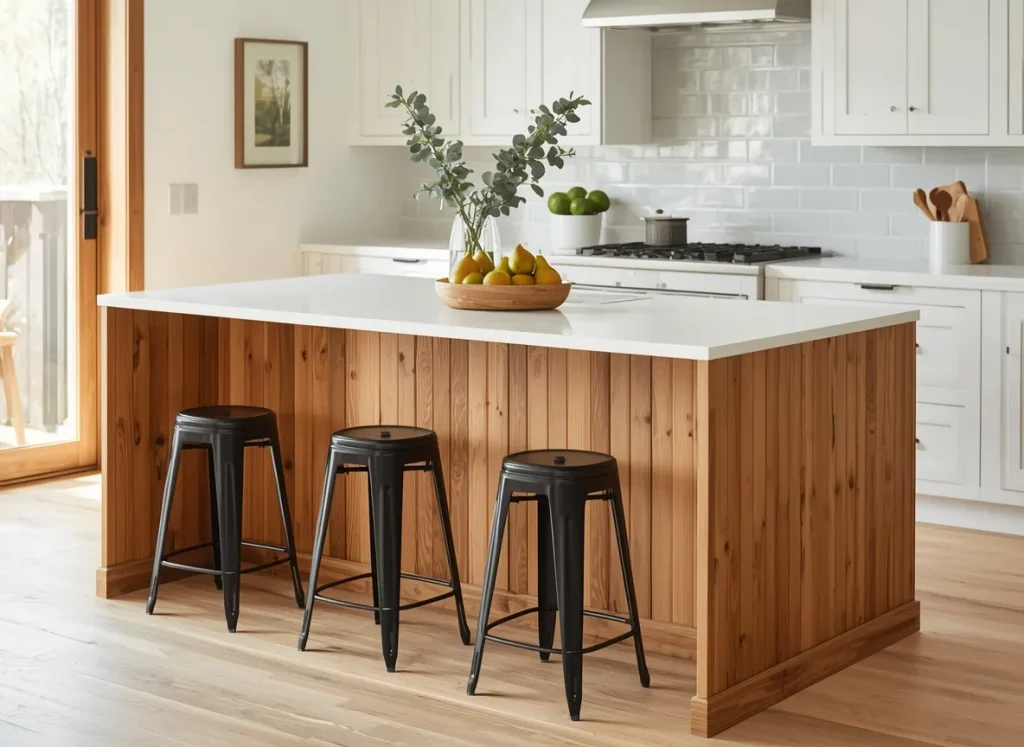
The sides of this island are covered in warm natural wood beadboard with a clear matte finish, so every knot and grain line shows. A white quartz top, three black metal stools, a wooden bowl of pears, and a vase of eucalyptus keep the look modern but cozy.
An all white kitchen can feel cold, and natural wood is the quickest fix. Real pine or oak beadboard takes stain beautifully, and a clear water based finish protects it without turning it orange. It also hides scuffs from shoes and stools far better than white paint.
Finish tip: Test the stain on a scrap piece first. Pine can soak up stain unevenly, so a wood conditioner beforehand gives a smoother color.
12. Line a Butler’s Pantry in Sage Green Beadboard
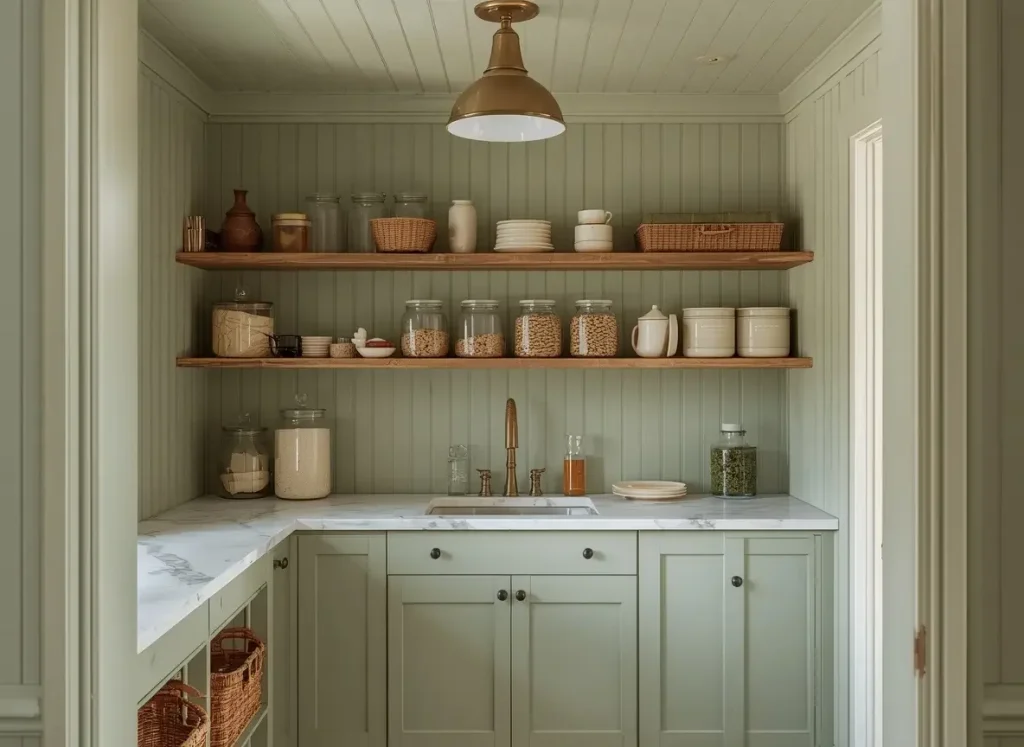
Soft sage green beadboard covers the walls and ceiling of this butler’s pantry, and the shaker cabinets below are painted the very same shade. Two chunky wood shelves hold glass jars of dry goods, stoneware, and woven baskets, while a small marble counter with a brass faucet and a brass pendant make it a handy, glowing prep space.
Wrapping a small room in one color, often called color drenching, makes it feel calm and intentional instead of cramped. Beadboard adds texture so a single shade never looks flat. Sage is one of the most loved kitchen colors right now because it pairs well with wood, brass, and white dishes.
Color drench tip: Paint the cabinets the same color as the walls but in a slightly glossier finish. They blend in, yet hold up better to everyday hands and bumps.
13. Build a Black Beadboard Open Shelf Wall
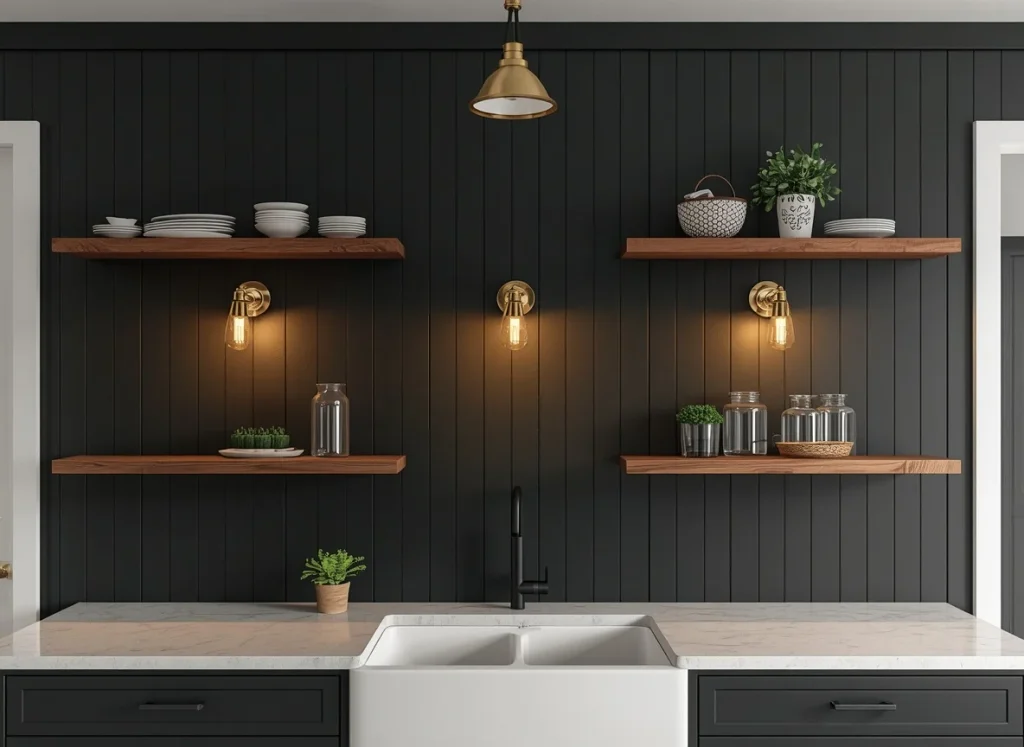
One full wall of matte black beadboard sets a moody stage for four chunky walnut shelves. White plates, glass jars, and little plants pop against the dark background, while three brass sconces and a brass pendant glow softly above a white double farmhouse sink.
Black sounds scary in a kitchen, but on a single wall it adds instant drama and makes white dishes and wood shelves look even better. Paint the beadboard first, then screw the shelf brackets into the studs right through the paneling so they can hold heavy plates. This step by step floating shelf guide from This Old House shows how to hide the supports for a clean look. Warm brass light keeps the black from feeling cold at night.
Lighting tip: Add sconces or under shelf lights to a black wall. Dark colors soak up light, and a warm glow keeps the wall from looking like a hole.
How to Install Beadboard in a Kitchen
Most beadboard projects follow the same simple steps. Start by measuring the area and buying about ten percent extra for cuts and mistakes. Turn off power and remove outlet covers, switch plates, and any trim along the floor.
Next, find and mark the wall studs with a pencil line. Cut your panels to size, using a jigsaw for any outlet openings, then spread construction adhesive on the back in a zigzag pattern. Press each panel to the wall, check it with a level, and tack it into the studs with finishing nails.
Finish the top edge with a cap or chair rail and add baseboard at the bottom. Fill the nail holes, caulk the seams and corners, and then prime and paint. Let the paint cure fully before you clean it, and the beadboard will stay looking fresh for years.
Beadboard Kitchen FAQs
Is beadboard a good idea in a kitchen?
Yes. Beadboard adds texture and charm, hides small dings, and is easy to wipe clean when painted in satin or semi-gloss. Just use PVC beadboard or seal it well near the sink, where water hits every day.
Can you put beadboard over existing drywall?
Yes. Most panels glue straight onto drywall with construction adhesive and a few finishing nails into the studs. There is no need to remove the old wall.
What paint finish is best for kitchen beadboard?
Satin or semi-gloss works best. Both handle cleaning and steam, and the light sheen shows off the grooves.
Is beadboard still in style?
Beadboard is a classic that keeps coming back, and right now it is popular in sage, butter yellow, and warm wood tones, as well as crisp white.
Final Thoughts on Beadboard Kitchen Ideas
Beadboard is proof that small details can change how a whole kitchen feels. A charcoal island, a whitewashed ceiling, or one sunny yellow coffee nook can bring warmth and character without a full remodel. These beadboard kitchen ideas work in farmhouse, cottage, coastal, and modern kitchens alike, and many of them take just a weekend.
Start with one small project, like the back of a hutch or a single accent wall, and see how much you love it.
Save this pin so you have these ideas ready for your next kitchen project.

2 thoughts on “13 Stunning Beadboard Kitchen Ideas With Paint Colors and Easy DIY Tips”